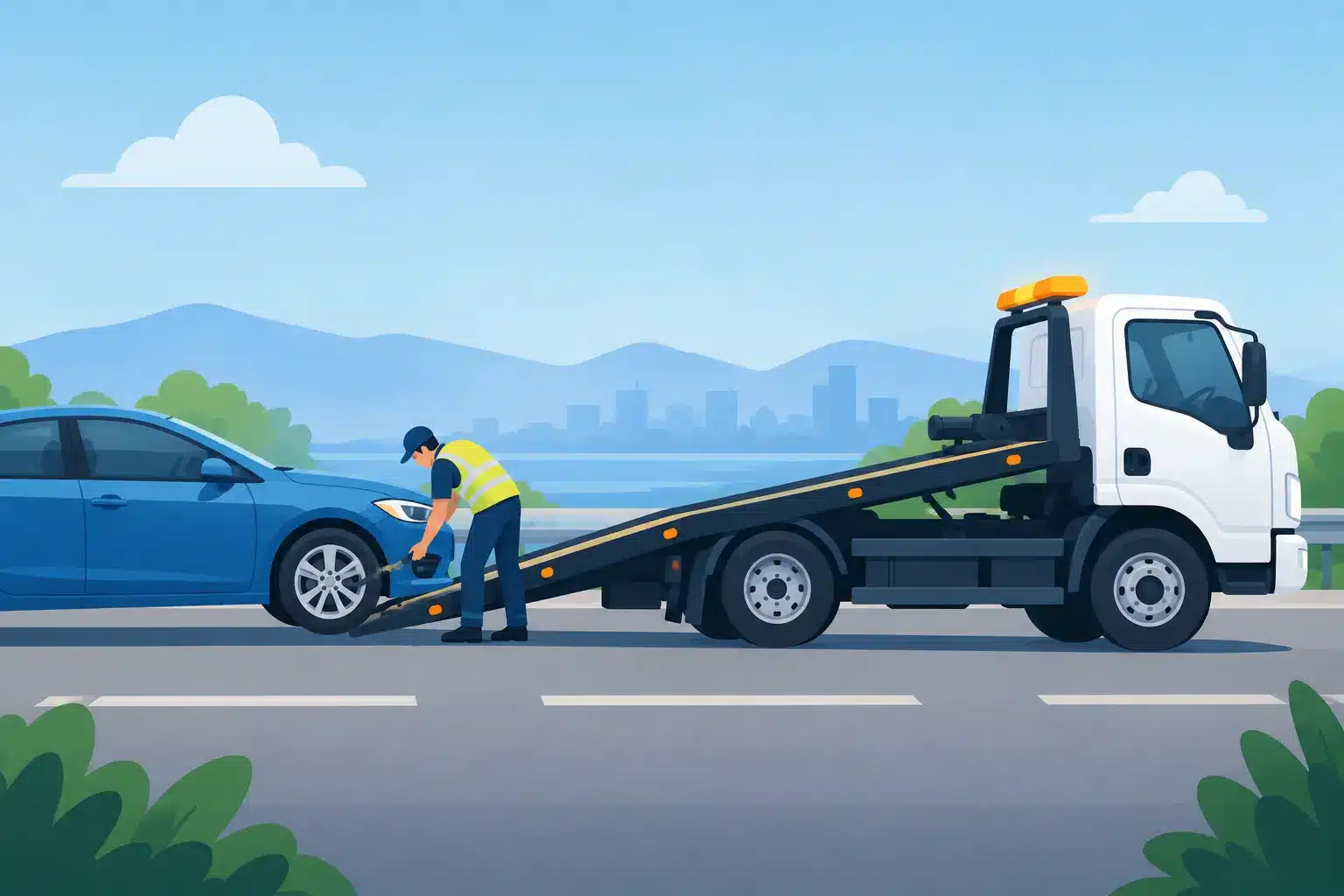
A vehicle can go from running normally to completely immobile in a matter of seconds. A flat tire on a busy road, a battery that will not start, warning lights, overheating, or a collision can leave you unsure whether it is safe to continue. The best reasons to call recovery are usually simple: your vehicle cannot move safely, you are stuck in an unsafe location, or the problem needs more than a quick roadside check.
Waiting and hoping the issue improves can turn a manageable breakdown into a bigger repair bill or a dangerous roadside situation. Professional recovery gives you a clear next step: get the vehicle moved, get yourself somewhere safer, and avoid making the fault worse.
A no-start problem is one of the most common reasons drivers need help. It may be a dead battery, loose battery connection, starter issue, fuel problem, or an electrical fault. If the lights are dim or you hear clicking when turning the key, a jump-start may get you moving. But if the vehicle still will not start, repeated attempts can drain the battery further and do not solve the underlying issue.
Calling for roadside assistance means the vehicle can be assessed quickly. If a jump-start is appropriate, that can be handled at the roadside. If it is not, recovery and transport to a home, garage, or repair facility is the safer option.
Location matters as much as the fault. Breaking down on a highway shoulder, narrow road, blind bend, busy intersection, or poorly lit area requires a fast response. Even a vehicle with a minor mechanical issue can become a serious risk when traffic is passing close by.
Move to a safe position if you can do so without putting yourself at risk. Turn on hazard lights, keep clear of moving traffic, and call for recovery. Do not stand between your vehicle and the road, and do not attempt repairs where passing traffic makes the situation dangerous.
Steam from under the hood, a rising temperature gauge, a coolant warning light, or a strong sweet smell can all point to overheating. Continuing to drive can cause severe engine damage, including a blown head gasket or warped engine components.
Stop as soon as it is safe. Turn the engine off and allow it to cool. Do not open a hot radiator cap or pour cold water onto a hot engine. Recovery is the right call when the cause is unclear, coolant is leaking, or the temperature climbs again after a short stop.
Not every flat tire requires a tow. If you have a usable spare tire, the correct tools, solid ground, and a safe location away from traffic, changing it may be possible. The situation changes when the tire has shredded, more than one tire is damaged, wheel components are bent, or there is no spare available.
A flat on the side of a busy road is also not a job to force. Calling for assistance avoids the risk of working beside traffic and prevents further damage from driving on a flat tire. Driving even a short distance on a deflated tire can ruin the tire, damage the wheel, and affect the suspension.
After a collision, a vehicle may look drivable but still have damage that makes it unsafe. A leaking fluid, damaged wheel, broken light, loose bumper, cracked radiator, or steering problem can worsen quickly once the vehicle is moving again.
If there is any doubt about the condition of the car or van, arrange recovery rather than taking chances. A trained recovery team can load and transport the vehicle without asking you to drive it farther than necessary. This is especially important after impacts involving the front end, wheels, underside, or steering.
Drivers often try to get home or reach a shop before calling for help. Sometimes that works, but it depends on the warning signs. Towing is usually the better decision when the vehicle has a major warning light, abnormal noises, smoke, leaking fluids, poor braking, steering problems, or a transmission issue.
A flashing check-engine light is a good example. It can indicate an active engine misfire, which may damage the catalytic converter if you continue driving. Similarly, grinding brakes, a soft brake pedal, or a steering wheel that pulls sharply to one side should not be ignored just because the vehicle is still moving.
The cost of recovery can feel inconvenient in the moment. The cost of turning a minor fault into a major mechanical repair is often much higher. When the vehicle feels unsafe or unpredictable, transport is the practical choice.
Recovery is not only for sudden breakdowns. There are times when a vehicle needs to be transported because it is not roadworthy, has no insurance or registration for the journey, has been purchased from another location, or cannot be driven due to a mechanical issue.
Cars and vans can also need transport after a failed repair, a long-distance move, or a breakdown far from home. A dedicated towing service is designed to move the vehicle securely without adding unnecessary mileage or risk. For van drivers, this can be particularly important when a loaded vehicle or work schedule is affected.
A dead battery rarely happens at a convenient time. It is often early in the morning, late at night, after work, or when you need to collect family or get to an appointment. Leaving lights on is one cause, but cold weather, an aging battery, and charging-system faults can all leave a vehicle unable to start.
A 24/7 recovery service gives you an option when garages are closed and friends or family are not nearby. If a jump-start gets the engine running, you can then decide whether it is safe to drive to have the battery and charging system checked. If it does not, the vehicle can be recovered without leaving you stranded.
Once you have called, focus on staying safe and making the pickup easier. Share your exact location, direction of travel, vehicle make and model, plate number, and a simple description of the problem. Mention if the vehicle is in a hazardous spot, blocked in, loaded, or unable to roll.
If you are on a busy road, remain behind a barrier where possible and keep passengers away from traffic. At night, use hazard lights and keep your phone charged if you can. Do not accept help from an unverified tow vehicle or agree to have your vehicle taken somewhere you did not authorize.
For drivers in Camberley and nearby GU areas, K & D Transport provides emergency roadside support, vehicle recovery, towing, van transport, and jump-start assistance when immediate help is needed. The right service depends on the fault, location, and condition of the vehicle, but quick dispatch can remove a lot of uncertainty from a difficult moment.
You do not need to diagnose the problem perfectly before making the call. If your vehicle cannot be driven safely, or you simply do not feel safe where you are, recovery is the sensible next move. Get yourself out of danger first, then let the vehicle be moved properly.

