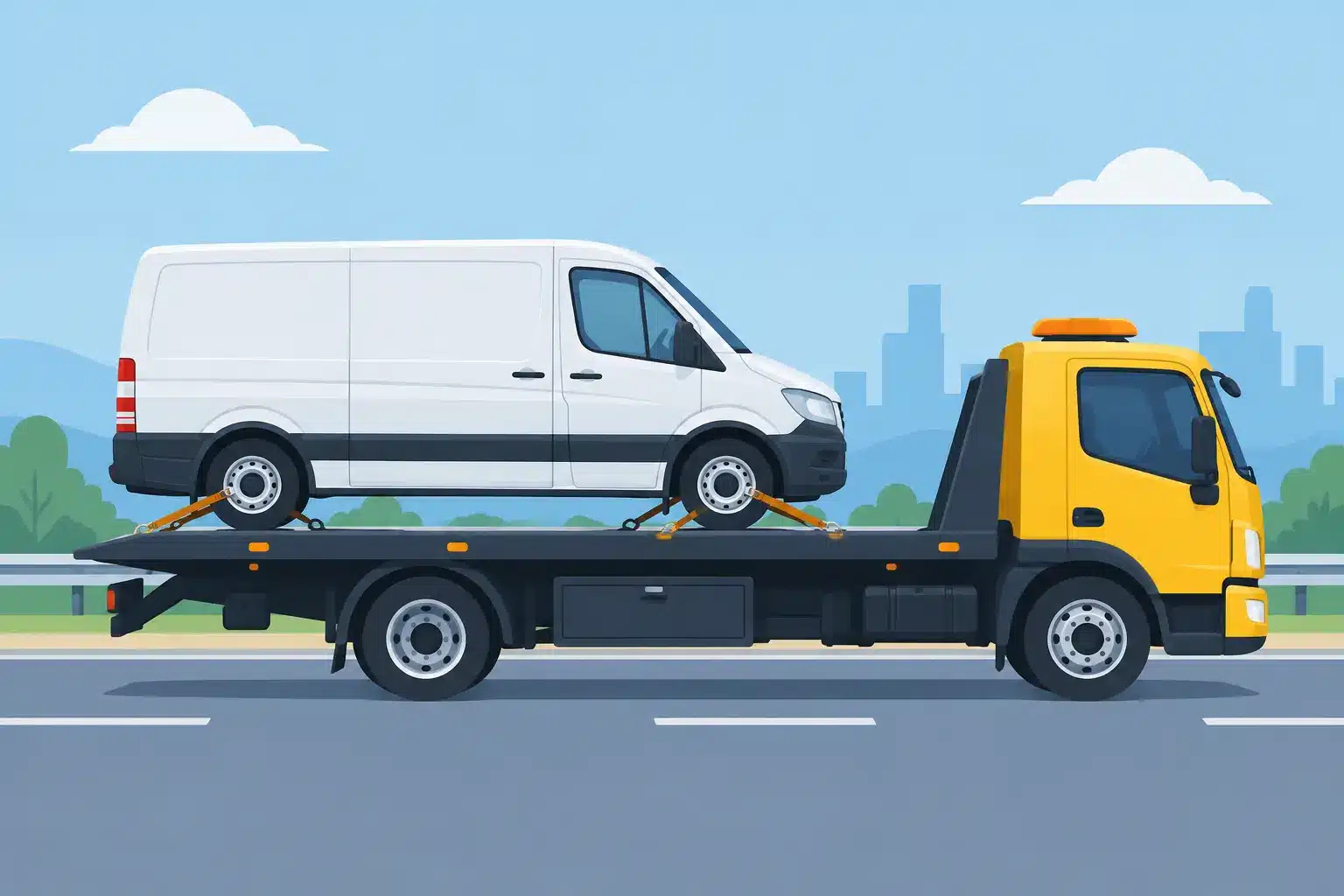
A broken-down van can block a workday, delay deliveries, or leave you stranded with a full load. So, do recovery trucks tow vans? Yes. A properly equipped recovery truck can tow or transport most vans safely, provided the recovery team checks the van’s size, weight, condition, driveline, and roadside position before loading it.
The right response is not simply to attach a rope and pull. Vans are heavier and taller than most cars, and many have commercial equipment, cargo, or mechanical damage that changes how they must be moved. A professional recovery operator chooses the correct truck and method first, then gets the vehicle off the road without creating further damage.
Recovery trucks tow vans every day, from small passenger vans to larger cargo and work vans. However, not every truck is suitable for every vehicle. The key issue is the van’s gross weight, wheelbase, height, and current condition.
A compact van with a flat tire may be straightforward to load onto a flatbed. A long-wheelbase cargo van with a loaded rear compartment needs more planning. A high-roof van may require a recovery truck with the right bed angle and clearance, while a vehicle carrying tools, stock, or equipment may need careful weight distribution during loading.
Before dispatching, a recovery company will normally need to know the van’s make and model, whether it is loaded, where it is located, and what has gone wrong. That information helps send the right vehicle rather than arriving with equipment that is too small or unsuitable for the job.
The best recovery method depends on whether the van can roll, steer, and brake, as well as whether it has drivetrain or wheel damage.
For many vans, a flatbed recovery truck is the safest option. The van is winched or driven onto a level bed and secured with wheel straps. Because all four wheels are off the ground, there is less risk to the tires, suspension, transmission, and driveline during transport.
Flatbed recovery is often preferred when a van has been in an accident, has a seized wheel, has suffered engine failure, or cannot be driven. It is also a sensible choice for longer-distance transport and for vans with automatic transmissions, all-wheel drive, or uncertain mechanical damage.
A wheel-lift recovery truck supports one end of the van while the other wheels remain on the road. This can be effective for short recoveries when the vehicle is in suitable condition and the operator can lift the correct end.
It is not always the right choice. If the wheels that remain on the ground are damaged, locked, or connected to a drivetrain that should not rotate, a wheel-lift tow can cause expensive problems. The operator must assess this before moving the van.
If a van is stuck in a ditch, soft ground, a tight parking area, or an unsafe roadside position, it may need to be winched before it can be loaded. This calls for controlled recovery, secure attachment points, and enough room to work safely.
A van that has rolled, has serious body damage, or is carrying an unstable load may require specialist handling. In these cases, speed matters, but rushing the first move can make the situation worse. The recovery team should secure the scene and plan the lift or pull before transporting the vehicle.
The van’s condition matters as much as its size. If it has a flat battery but is otherwise safe, roadside jump-start assistance may get you moving without a tow. If the engine has failed, the clutch has gone, or the vehicle will not start safely, recovery and transport are the better option.
Transmission type is another important factor. Some automatic, electric, hybrid, four-wheel-drive, and all-wheel-drive vans should not be towed with driven wheels on the road. Flatbed transport is usually the safer approach because it avoids turning components that may be damaged or not lubricated while the engine is off.
Tire damage also changes the plan. A puncture is one thing. A shredded tire, bent wheel, or damaged suspension can make roadside towing unsafe. If the van cannot roll freely or the steering is locked, it should generally be winched onto a flatbed rather than dragged or pulled.
Cargo deserves attention too. A work van may carry ladders, tools, boxes, machinery, or materials. Tell the recovery operator if the vehicle is heavily loaded or carrying anything that could shift. Secure loose items where possible and make sure roof racks, ladders, and rear doors are stable before recovery begins.
Clear details help the team arrive prepared and reduce delay at the roadside. Give the vehicle registration or make and model, explain the fault, and say whether the van can roll, steer, and brake. If you know the van is automatic, electric, four-wheel drive, loaded, or has damaged wheels, mention that immediately.
Your exact location is equally important. State the road name, direction of travel, nearest landmark, exit number, or safe parking area. If you are on a busy road, explain whether the van is on the shoulder, in a live lane, in a parking lot, or blocking access. This helps the operator judge what recovery truck and safety equipment are needed.
If the van is carrying passengers, arrange for them to stay in a safe place away from traffic where possible. A recovery truck is designed to move the vehicle, not necessarily every passenger and their belongings. Ask about passenger arrangements when you request assistance so there are no surprises at pickup.
Your first priority is safety. Turn on hazard lights, move away from traffic if it is safe to do so, and avoid standing behind or in front of the van. On a high-speed road, follow local roadside safety guidance and do not attempt repairs near moving traffic.
Do not crawl underneath the van, try to force a damaged wheel to turn, or attach an improvised tow strap to an unknown point. Modern vans have sensors, plastic trim, low-mounted components, and towing points that can be damaged if used incorrectly. A recovery operator will use rated equipment and approved attachment points for the situation.
If you can, remove valuables, paperwork, and loose personal items before the van is transported. Keep your keys, insurance details, and destination information ready. If the vehicle is being taken to a repair shop, confirm the shop’s address and whether it can accept the van when it arrives.
Not every van problem requires towing. A dead battery, an empty fuel tank, a minor issue with a loose battery connection, or a simple tire problem may be resolved at the roadside. A trained technician can assess the fault and tell you honestly whether the van can be driven safely.
That said, do not continue a journey just because the engine restarts. Warning lights, overheating, smoke, unusual noises, brake issues, steering problems, or repeated electrical failure are signs that recovery is the safer decision. A short drive after a serious fault can turn a repair into a major breakdown.
K & D Transport provides emergency roadside assistance, van towing, and recovery support when a van cannot safely continue. The goal is simple: get the vehicle out of danger, move it with the right equipment, and help you take the next step without added stress.
A van breakdown is disruptive, especially when work, passengers, or deliveries depend on it. Give the recovery team accurate details, stay safe while you wait, and let the correct truck do the job properly. The fastest solution is usually the one that prevents a second problem.

