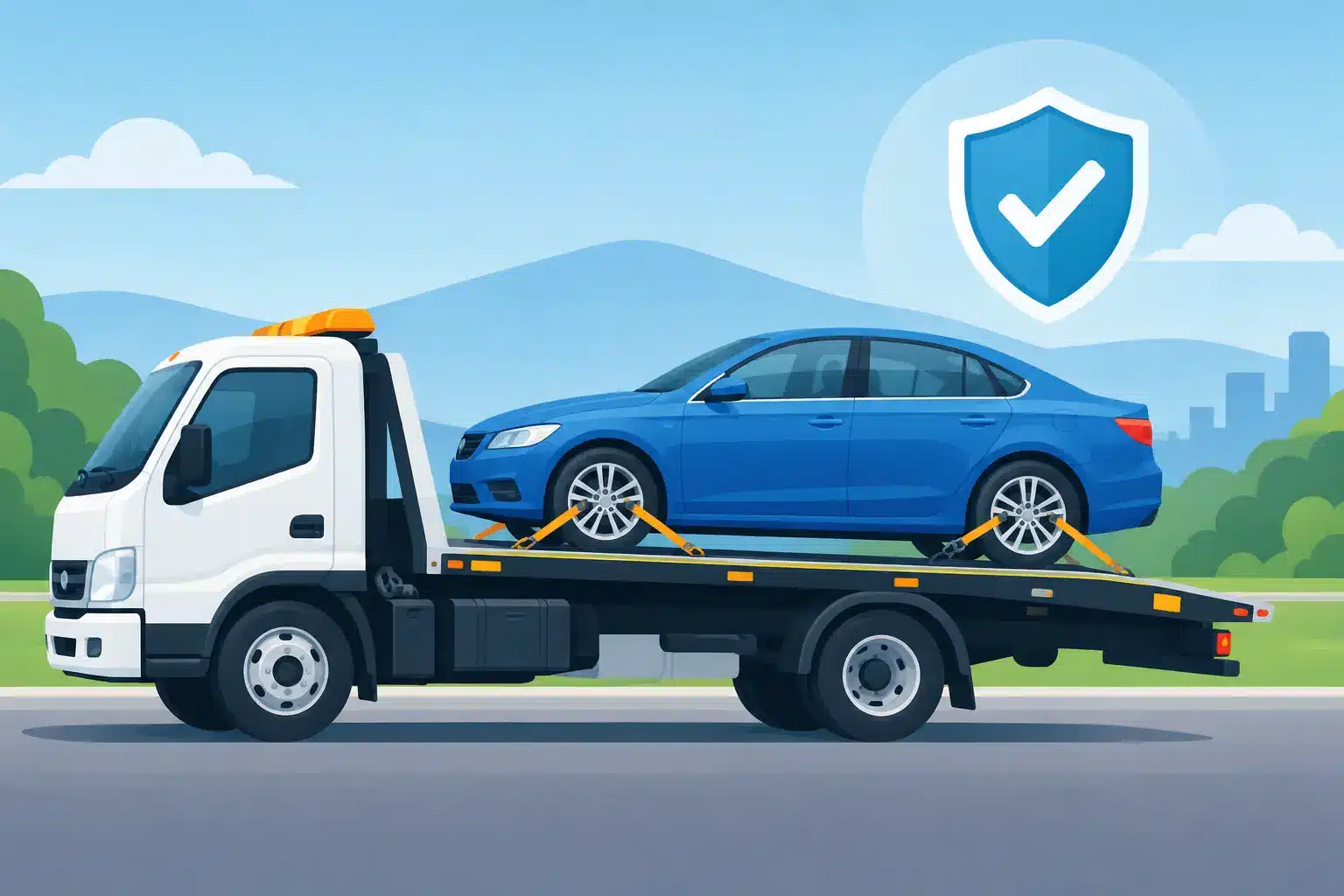
A recovery vehicle arriving is a relief when your car has stopped at the roadside. It is also the point at which the right decisions protect it from avoidable damage. Knowing how to protect a car during towing means using the correct equipment, giving the recovery operator the right information and checking the vehicle at handover. The aim is simple: get your car to a safe place without creating a second problem.
The safest recovery method depends on the car, not just the distance. A vehicle with gearbox trouble, steering damage, locked wheels or a flat tyre may need a different approach from a car that has simply suffered a dead battery. Modern vehicles can also be damaged if they are towed with the driven wheels on the road when the manufacturer does not permit it.
For many cars, especially automatics, electric vehicles, hybrids, four-wheel-drive models and low-clearance vehicles, a flatbed transporter is the safest choice. All four wheels travel off the ground, avoiding unnecessary load on the transmission, differential and tyres. It also gives the operator better control when the vehicle cannot be driven onto the bed.
A short tow may be suitable in limited circumstances, but it should never be treated as the default answer. The recovery technician needs to assess the vehicle condition, its drivetrain and where it is being collected from before deciding how to move it. If there is any doubt, ask for a transporter rather than risking damage to save a little time.
Clear information before the vehicle is loaded helps the operator arrive with the right equipment. Explain whether the engine starts, whether the steering unlocks, which wheels are damaged, and whether the car is automatic, electric, hybrid or four-wheel drive. Mention warning lights, accident damage, a puncture, a failed handbrake or a suspected gearbox fault.
Do not assume a car that rolls freely is safe to tow conventionally. A vehicle may have internal mechanical damage that is not obvious at the roadside. Equally, if it is parked in a tight bay, underground car park or on a narrow residential road, say so when arranging recovery. Access can affect whether a standard recovery lorry, winch or low-loader is required.
Proper loading is where most of the protection happens. The vehicle should be winched onto a transporter in a controlled, straight line where possible. Sudden pulling, sharp angles and unsuitable attachment points can damage bumpers, undertrays, suspension components or steering parts.
A trained operator will use approved recovery points and suitable straps or wheel restraints. Straps should secure the wheels or approved anchoring points, not crush vulnerable bodywork or rub against painted panels. If your vehicle is particularly low, has aftermarket bodywork or sits on wide wheels, point this out before loading. Extra care, ramps or blocks may be needed to prevent the front spoiler, exhaust or underside from grounding.
The handbrake setting and gear position should be decided with the recovery technician. These steps vary depending on how the car is being carried and its condition. Follow their instructions rather than changing settings once the vehicle has been secured.
Before the transporter leaves, take a moment to look at the car. You are not expected to inspect the recovery equipment, but it is reasonable to check that the vehicle is sitting level, the restraints are secure and nothing is visibly pressing against the bodywork.
A few photographs can make a stressful situation easier to manage. Take clear pictures of each side of the car, the wheels, front and rear bumpers, windscreen and any existing damage. If it is dark or raining, use your mobile phone torch where safe to do so. A quick record is useful for both you and the recovery company if there is a question later.
Remove loose valuables where possible, including wallets, electronics, tools and documents containing personal information. Leave the keys requested by the operator, along with any locking wheel nut key or wheel security information if relevant. Tell them if the alarm is temperamental, the battery is flat or the vehicle has a non-standard immobiliser.
You should also confirm the destination and contact details. A car may be going to your home, a garage, a dealership or a body repair centre. Make sure the receiving location can accept it, particularly outside normal opening hours. There is little benefit in getting the vehicle recovered quickly if it cannot be safely unloaded at the other end.
Once loaded, secure transport is about careful driving and proper checks. The recovery driver should allow for the vehicle's size, weight and clearance, particularly over speed humps, uneven roads and tight entrances. A well-secured car should not shift on the bed during the journey.
This matters even more for long-distance transport. Vibration, weather and road conditions can expose weak straps or loose parts, so professional operators check the load as required during the journey. If the car has accident damage, a hanging undertray, loose trim or a broken window, tell the recovery team before departure. They can take appropriate precautions rather than discovering the issue at motorway speed.
Avoid trying to follow closely behind the recovery vehicle if you are upset, tired or unfamiliar with the route. Arrange a lift, taxi or alternative transport if needed. The priority is your safety as well as the vehicle's condition.
At drop-off, inspect the car before the recovery vehicle leaves if you can. Compare it with the photos taken at collection and look at the wheels, bumpers, mirrors, glass and lower bodywork. Check that your keys, wheel nut key and any agreed items are accounted for.
If you notice something new, raise it calmly with the driver straight away and take photographs. Most recovery jobs go without issue, but a clear handover gives everyone the best chance to deal with a concern properly. Do not drive a vehicle that was recovered for steering, brake, tyre, suspension or serious mechanical faults until it has been assessed or repaired.
When waiting for recovery, focus on five useful details: move yourself to a safe place where possible; share the car's make, model and fault; state any access restrictions; take condition photos; and confirm the delivery address. These small steps help the job run faster and reduce the chance of using the wrong recovery method.
Being stranded near Camberley or elsewhere in the GU area can make any delay feel urgent, especially at night, in poor weather or with children in the car. Fast help should still mean the right help. A dead battery may only need a jumpstart, while a vehicle with a serious fault needs controlled recovery and transport.
K & D Transport provides 24/7 roadside assistance, breakdown recovery and car or van towing for drivers who need a dependable response. Give the team an accurate description of the problem, and they can send the most suitable vehicle and equipment for the situation.
A careful recovery starts before the wheels move. Choose trained support, communicate the condition of your vehicle clearly and let the correct equipment do the work. That is the safest route from a roadside breakdown to a secure delivery.

