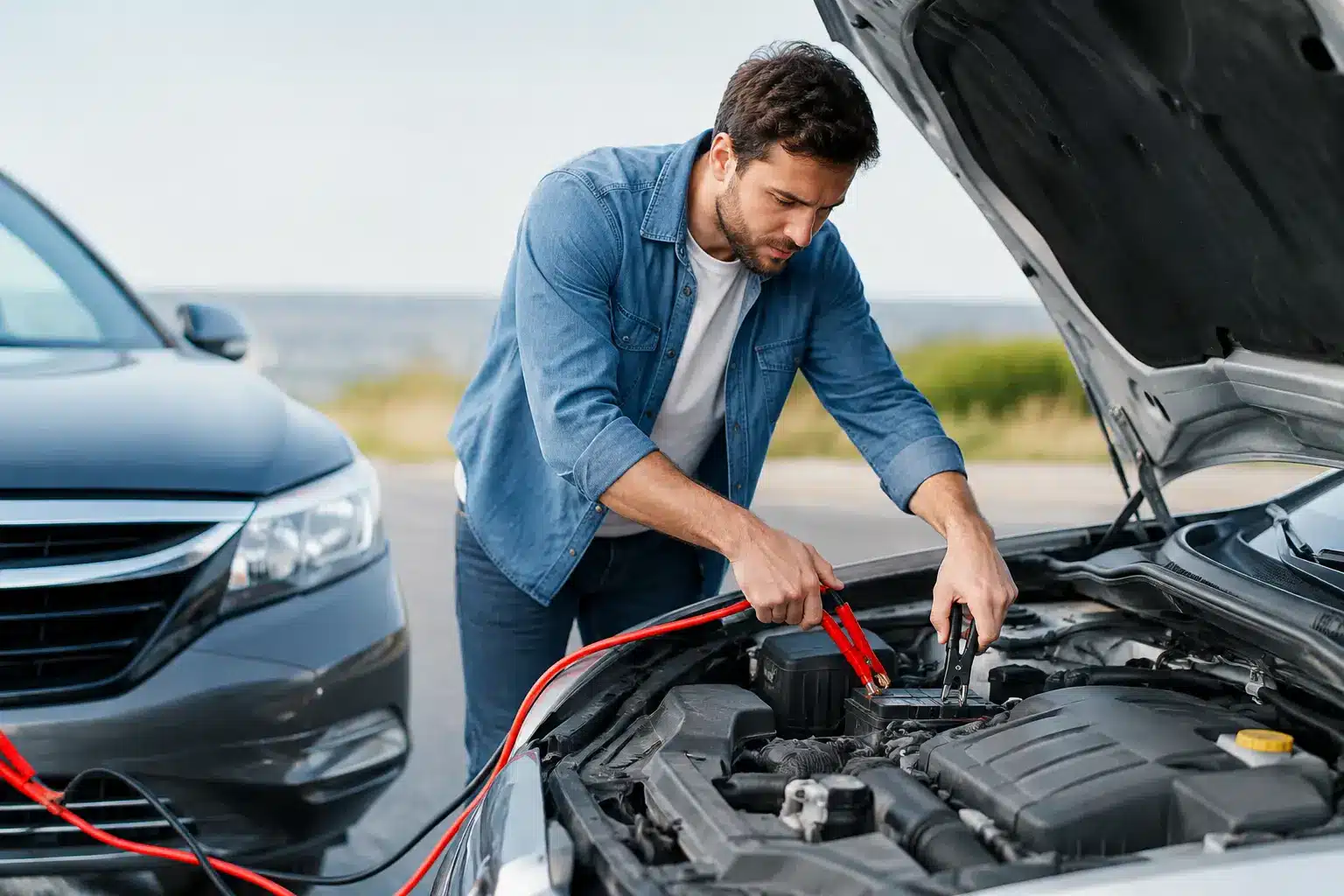
You turn the key or press the start button, the dashboard lights flicker, and nothing happens. It is a familiar problem, but the reasons cars need jumpstarts are not always as simple as an old battery. A jumpstart may get you moving again, yet it can also be the first warning that another part of the vehicle needs attention.
When you are stranded at home, at work, in a car park or at the roadside, the priority is getting safe and getting help quickly. Knowing what may have caused the flat battery can help you decide whether a jumpstart is likely to solve the immediate problem or whether your car needs recovery and further checks.
A car needs enough stored electrical power to operate its starter motor and engine management system. If the 12-volt battery cannot supply that power, the engine will not start. You may hear a rapid clicking sound, a single click, or no sound at all. On some vehicles, the interior lights may be weak or the central locking may stop working properly.
The cause can be a one-off drain, a battery reaching the end of its life, or a charging fault. Here are the most common reasons a vehicle may suddenly need a jumpstart.
Car batteries do not last forever. Many last around three to five years, although regular use, weather, driving habits and the type of vehicle all affect their lifespan. As the battery ages, it holds less charge and may struggle most when the engine is cold or after the car has been left standing.
A failing battery can appear fine one day and flat the next. If your car has needed more than one jumpstart in a short period, do not assume it is just bad luck. The battery may no longer be able to retain enough charge and should be tested or replaced before it leaves you stranded again.
Headlights, sidelights, interior lamps, boot lights and accessories can drain a battery when the engine is off. Modern cars often switch lights off automatically, but not every system does, and a door or boot that has not fully closed can leave a light running for hours.
Phone chargers, dash cameras, portable cool boxes and other plug-in equipment can also take power from the battery. One evening of electrical drain can be enough to prevent a car with a weak battery from starting the following morning. In this case, a jumpstart may get the engine running, but the battery still needs time to recharge properly.
The alternator recharges the battery while the engine is running. However, a short trip does not always replace the energy used to start the engine, especially in colder weather when heaters, demisters, lights and wipers are working harder.
This is common for vehicles used mainly for school runs, local errands or a brief commute. The car starts repeatedly but rarely gets a long enough drive to recover its charge. It does not mean every short journey will cause a flat battery, but it can become a problem when combined with an older battery or high electrical demand.
A jumpstart can restart the engine, but it cannot repair a charging fault. If the alternator is weak or has failed, the battery may not recharge while you drive. The vehicle can then lose power again, sometimes soon after the jumpstart.
Warning signs include a battery warning light on the dashboard, dimming headlights, electrical faults, unusual whining noises or a burning smell from the engine bay. If these appear, it is safer not to rely on repeated jumpstarts. Continued driving could leave you immobilised in a less safe location and may cause further problems.
The battery may be in good condition but unable to deliver power through poor connections. Corrosion around the terminals, loose clamps or damaged cables can interrupt the electrical supply needed to start the vehicle.
You may notice white, blue or green residue around the battery terminals, although the problem is not always visible. A trained technician can check the connections safely and identify whether the issue is the battery itself, the terminals or another part of the starting system. Do not handle damaged battery cables if you are unsure what you are looking at.
Cold mornings are a common time for battery trouble. Low temperatures slow the chemical reaction inside a battery, reducing the power available to start the engine. At the same time, the engine needs more effort to turn over.
A healthy battery should cope with normal winter conditions, but cold weather often exposes one that is already weak. If your car only struggles after a frosty night, it is still worth arranging a battery and charging-system check. Waiting for the next cold spell can turn a manageable issue into an urgent roadside breakdown.
A battery can go flat even when you have not left any obvious lights on. This is known as a parasitic drain. A faulty electrical component, alarm system, control module, wiring issue or accessory can continue drawing power after the vehicle has been switched off.
These faults are often frustrating because the car may start normally after a long drive, then be flat again after sitting overnight or for a day or two. A jumpstart is useful for getting you moving, but it will not stop the drain. The vehicle needs proper diagnosis to find the source.
A successful jumpstart tells you the battery was too low to start the car at that moment. It does not confirm why the battery went flat. If the engine continues to run normally and the battery has been drained by a clear one-off cause, such as an interior light being left on, you may be able to continue your journey after allowing the vehicle to charge.
However, repeated flat batteries, a dashboard warning light, poor starting after longer drives or electrical faults point towards a problem that needs more than a boost. Continuing to jumpstart the car can delay the proper repair and leave you stranded at the worst possible time.
There is also a difference between a flat battery and a non-start caused by another fault. A damaged starter motor, fuel issue, immobiliser fault or engine problem may stop the car starting even when the battery is healthy. If the vehicle does not respond as expected after a professional jumpstart, recovery may be the safer next step.
First, avoid repeated attempts to start the engine. Each attempt uses more battery power and can make diagnosis harder. If you are in an unsafe location, focus on your surroundings, use your hazard warning lights if possible and move away from traffic where it is safe to do so.
Do not attempt a jumpstart if the battery is leaking, swollen, cracked or giving off a strong smell. It is also best to call for assistance if you do not have the correct equipment, are unsure about the connection points, or drive a hybrid or electric vehicle. These vehicles still have a 12-volt battery, but their systems require the correct procedure and should never be treated like a standard petrol or diesel car without checking the manufacturer guidance.
For drivers in Camberley and nearby GU areas, K & D Transport provides 24/7 jumpstart support and roadside assistance when a flat battery stops your journey. If a restart is not appropriate or the fault appears more serious, the vehicle can be recovered and transported rather than left at the roadside.
A dead battery rarely arrives at a convenient time. Acting early after the first warning signs - slower cranking, dim lights or repeated jumpstarts - gives you a better chance of dealing with the problem safely, rather than discovering it when you need the car most.

