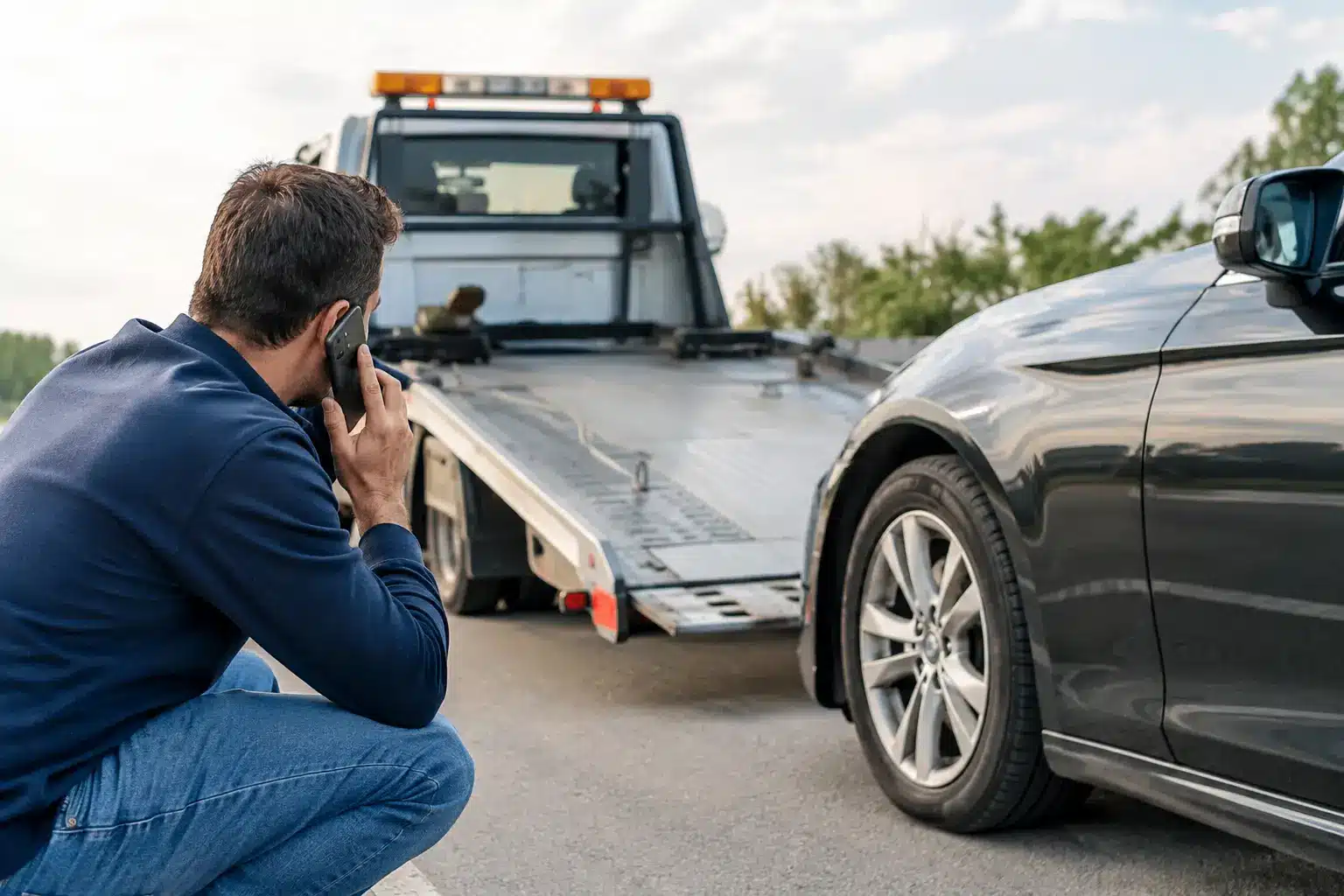
A car that will not start outside your home is frustrating. A car that stops on a busy road, at night or with children on board needs a quick, safe response. The top reasons cars need recovery are often ordinary faults that become urgent because the vehicle cannot be driven safely or legally any further.
Recovery is not only for serious crashes. It can mean a jumpstart at the roadside, towing a non-running vehicle to a garage, moving a van after a breakdown or transporting a vehicle that should not be driven. The right response depends on the fault, your location and the condition of the vehicle.
A dead battery is one of the most common reasons drivers call for help. You may turn the key or press the start button and hear only clicking, see dim dashboard lights, or get no response at all. Batteries can fail after lights are left on, after the car has been standing for several days, or simply because they are reaching the end of their life.
A jumpstart may get you moving, but it is not always the full answer. If the battery will not hold charge, the alternator is faulty, or warning lights remain on after the engine starts, driving on may leave you stranded again. A trained roadside technician can assess whether a safe restart is realistic or whether recovery to a garage is the better option.
Modern cars can develop faults with little warning. An engine management light, loss of power, unusual smoke, a strong burning smell or loud knocking can all mean the vehicle needs to stop. Continuing to drive with a serious engine issue can turn a repairable problem into expensive damage.
Overheating needs the same caution. If the temperature gauge rises into the red, steam comes from under the bonnet or you receive a coolant warning, pull over somewhere safe as soon as possible. Do not remove the radiator cap while the engine is hot. Letting the car cool does not necessarily make it safe to drive, particularly if coolant has leaked or the cooling system has failed. Recovery avoids risking engine damage or another roadside stop.
A puncture is not always a simple roadside tyre change. Some vehicles have no spare wheel, only a temporary repair kit, and that kit will not work on every type of tyre damage. A split sidewall, a badly damaged tyre, a bent wheel or multiple punctures can leave the vehicle unsafe to move.
Driving on a flat tyre can destroy it quickly and may damage the wheel as well. If you have struck a kerb or pothole and the steering feels wrong, the car pulls sharply to one side, or there is vibration through the wheel, stop and arrange help. It may be an alignment issue, but it could also involve suspension or steering components that should not be ignored.
After a collision, a car may look driveable but still be unsafe. Damage beneath the bumper, leaking fluids, a loose wheel, broken lights, deployed airbags or a bent steering component can make further travel dangerous. Even a low-speed impact can affect tyres, tracking, radiators and safety systems.
Move to a safe location only if the vehicle can be moved without risk. If it is blocking traffic and can be driven a short distance, follow the directions of the emergency services or road operator where applicable. Otherwise, vehicle recovery is the sensible next step. A proper tow or transport service prevents further damage and gets the vehicle to a repairer, home address or other agreed destination.
Cars rely on electrical systems for far more than headlights and the radio. A fault can affect ignition, fuel delivery, braking assistance, steering assistance, locking systems or the dashboard itself. Warning messages may appear suddenly, or the vehicle may shut down after starting.
Electrical faults can be difficult to diagnose at the roadside, especially in poor weather or darkness. If the car loses power, shows several warning lights at once, has intermittent starting issues or cannot be locked securely, recovery may be more practical than waiting for the problem to worsen. This is particularly true for drivers who need to get to work, collect children or keep a van on the road for business.
Running out of fuel is stressful, but it does not always require a tow. If the vehicle is in a safe location, the correct fuel can sometimes get you going again. However, stopping on a motorway, a fast road or an unsafe roadside changes the situation. Your safety comes first, and professional assistance is the right call.
Putting the wrong fuel in the tank is more serious. Starting the engine after misfuelling can circulate contaminated fuel through the system and cause costly damage. Do not turn the ignition on if you realise the mistake in time. Arrange recovery or specialist assistance instead of trying to dilute the fuel and carry on.
A clutch that will not engage, a gearbox stuck in gear, grinding noises or a sudden inability to select gears can leave a car immobilised. For automatic vehicles, transmission warning messages, slipping or refusal to move should also be taken seriously. These faults are not problems to force your way through.
The method of recovery matters here. Some vehicles should not be towed with the driven wheels on the road, as this can cause transmission damage. A professional recovery team will use the appropriate equipment and loading method for the vehicle's condition. This is one reason a dedicated towing fleet is a safer choice than an improvised tow rope.
A key may be lost, damaged or locked inside the car. Keyless systems can also fail, and immobiliser faults can prevent an otherwise healthy vehicle from starting. These situations are inconvenient at home and potentially unsafe when they happen in a car park, at a station or on the roadside.
The best solution depends on the vehicle and the security issue. Sometimes you need a locksmith or dealer support; sometimes the car needs to be transported because it cannot be started or accessed safely. Avoid damaging a window, forcing a lock or attempting to bypass an immobiliser. The cost and disruption usually outweigh the wait for professional help.
It can be tempting to drive slowly to the nearest garage, especially if the car still moves. That decision should be based on safety, not convenience. Recovery is usually the better option when there are serious warning lights, smoke, leaks, steering or brake changes, tyre damage, collision damage or a clear loss of power.
You should also consider your surroundings. A minor fault on a quiet residential road may be manageable with roadside help. The same fault on a dual carriageway, in heavy rain or after dark needs a more cautious response. Get yourself and passengers away from danger where possible, use hazard lights and follow the safety advice for the road you are on.
Do not stand in a live lane, work under the vehicle or attempt repairs near moving traffic. If you are on a motorway and cannot reach a safe place, contact the relevant road authority or emergency services as appropriate before arranging vehicle assistance.
Accurate information helps a recovery operator send the right vehicle and equipment. Be ready to provide your exact location, the vehicle registration, make and model, and a clear description of what has happened. Mention whether the car starts, whether it can roll, any warning lights, visible damage and whether you are carrying passengers.
It also helps to explain the destination you need, whether that is a local garage, your home or another address. Vans, electric vehicles, lowered cars and vehicles with accident damage may need particular handling, so say this at the point of booking. Clear details reduce delays and help the recovery team arrive prepared.
K & D Transport provides 24/7 roadside assistance, breakdown recovery, jumpstarts and towing for cars and vans across Camberley, nearby GU areas and wider UK journeys when required. When a vehicle cannot continue safely, prompt professional support gives you a clear route out of a difficult situation.
If you are stranded, focus on getting to a safe place and getting the right help rather than trying to nurse an unsafe vehicle onwards. A quick recovery can protect your car, reduce disruption and get you moving again with far less stress.

