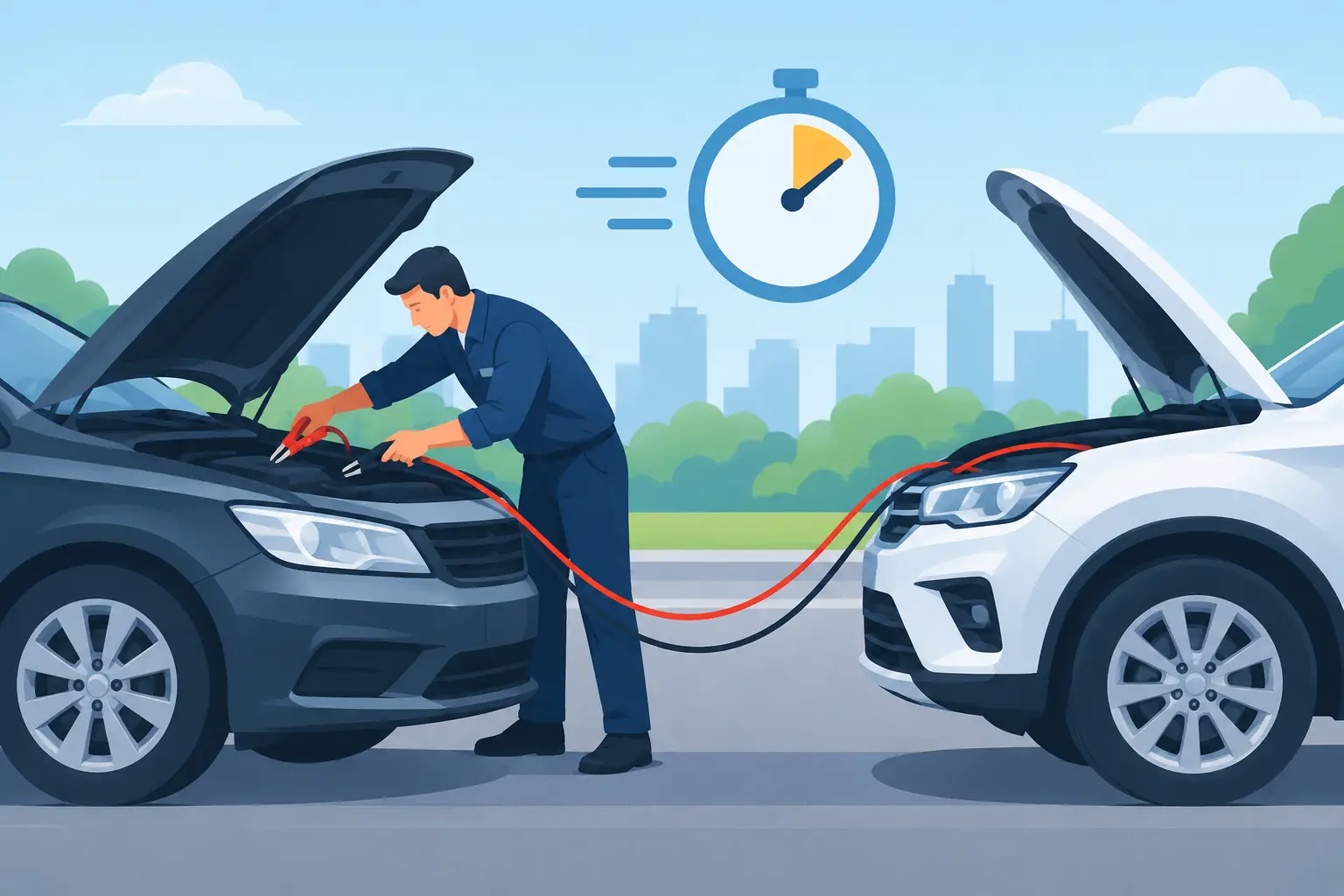
Your car will not start outside work, on the school run or in a dark car park. The best jumpstart service benefits are not just about getting the engine running again. They are about having trained help arrive quickly, checking that the battery is safe to restart and giving you a clear next step when you are stranded.
A flat battery can stop an otherwise reliable day without warning. Interior lights may have been left on, cold weather may have reduced battery performance, or the battery may be nearing the end of its working life. Whatever caused it, waiting for a friend with jump leads is not always practical or safe. A professional roadside response gives you a quicker, more dependable way forward.
Jumpstarting looks simple until it goes wrong. Modern cars have sensitive electrical systems, and incorrect connections can cause sparks, damage components or leave you with the same problem minutes later. A trained technician knows how to connect suitable equipment correctly and assess whether the vehicle is likely to remain running after the restart.
The main benefit is speed when you need it most. Rather than arranging a lift, finding jump leads and hoping another vehicle can reach you, you can request roadside assistance from a team prepared for vehicle emergencies. For drivers in Camberley and nearby GU areas, that can mean less time exposed at the roadside and less disruption to work, family plans or deliveries.
Professional support also removes uncertainty. You know who is attending, what service has been requested and what happens if a jumpstart is not enough. If the vehicle cannot be restarted safely, recovery or onward transport can be arranged instead of leaving you back at square one.
Using the wrong leads, attaching clamps in the wrong order or trying to jumpstart a damaged battery can create unnecessary risk. A roadside technician uses appropriate starting equipment and follows a safe process. This matters particularly with newer vehicles, where battery access and electrical systems can be less straightforward than they appear.
A professional will also look for obvious warning signs before attempting a restart. A swollen battery case, strong sulphur smell, leaking fluid or damaged terminals are reasons to avoid a standard jumpstart. In these situations, recovery may be the safer option.
Dead batteries rarely happen when it suits you. They happen before an early shift, after a long day, or when you are trying to get home. A 24/7 jumpstart service is built for these moments, with dispatch focused on getting assistance to you without unnecessary delays.
Response times can depend on traffic, weather, your exact location and current demand. Still, choosing a local emergency roadside provider is usually far more practical than waiting for someone who may not have the equipment or availability to help. Clear location details, your registration and a brief description of the fault can help speed up dispatch.
Being unable to start your car is frustrating. Being unable to start it on a busy road, in an unfamiliar area or while travelling alone is a different level of pressure. Professional assistance gives you a single point of contact and a practical plan.
You do not need to diagnose the battery yourself or decide whether it is safe to accept help from a passer-by. The focus is simple: assess the vehicle, attempt a safe restart where appropriate, and arrange recovery if it is not.
A dead battery affects more than private motorists. Van drivers can lose valuable working time, miss appointments and be left with tools or stock stranded with the vehicle. A provider that supports both cars and vans can respond to a wider range of breakdown situations without treating every call as a standard car recovery job.
The right service considers access, vehicle type and where you are parked. A van in a tight residential street, a car in a multi-storey car park and a vehicle stopped on a main road may each require a different approach. That operational experience saves time when urgency matters.
Not every no-start problem is a flat battery. The issue could be a failing alternator, a loose connection, starter motor trouble, a battery that will not hold charge or another electrical fault. A jumpstart may get the engine going, but it cannot repair the underlying cause.
This is where a full roadside and recovery service makes a real difference. If the vehicle starts but shows battery warning lights, struggles to stay running or cuts out again, you can move straight to vehicle transport rather than taking a risky journey. K & D Transport can provide practical assistance for jumpstarts, breakdown recovery and towing when the vehicle needs more than a quick restart.
The process should be direct. You provide your location, vehicle details and a short explanation of what has happened. If you are on a live road, say so immediately and follow any safety instructions while help is being arranged.
On arrival, the technician will assess the situation and confirm whether a jumpstart is suitable. They may check for visible battery issues, poor terminal connections or signs that the vehicle has another fault. If it is safe to proceed, they will connect the equipment correctly and start the vehicle.
Once the engine is running, do not assume the problem has disappeared. The technician may advise you to keep the engine running for a period, avoid switching it off until you reach a suitable destination, or have the battery and charging system checked. That advice depends on the vehicle and the symptoms, but it can prevent another breakdown a few miles later.
A professional service is valuable partly because it knows when not to force a restart. If the battery has been repeatedly going flat, the vehicle may need a replacement battery or electrical diagnosis. If the engine turns over but will not fire, the problem is unlikely to be solved by jump leads alone.
Electric and hybrid vehicles also need careful handling. Their 12-volt battery can still go flat, but high-voltage systems must never be treated like a conventional petrol or diesel vehicle. Always tell the recovery provider what type of vehicle you have before assistance arrives.
If you have broken down in a dangerous position, your immediate priority is personal safety. Move away from moving traffic where it is safe to do so, use hazard lights if appropriate, and keep clear of the vehicle if its position creates a risk. A quick restart is useful, but safe recovery is more important.
When your battery is flat, the cheapest option is not always the best one. Look for a service that is available around the clock, gives clear communication and can offer recovery if the restart fails. This avoids the frustration of paying for a jumpstart only to be left stranded again when a deeper fault becomes clear.
Local knowledge also matters. A provider familiar with Camberley, surrounding GU postcodes and wider recovery routes can locate you more efficiently and understand common access issues around homes, business parks and busy roads. For longer-distance needs, confirm that vehicle transport can be arranged rather than assuming every operator covers the same area.
Keep the provider's number saved before you need it. A flat battery is easier to deal with when you already know who to call, can explain your location clearly and have support ready to get you moving or get your vehicle safely recovered.

