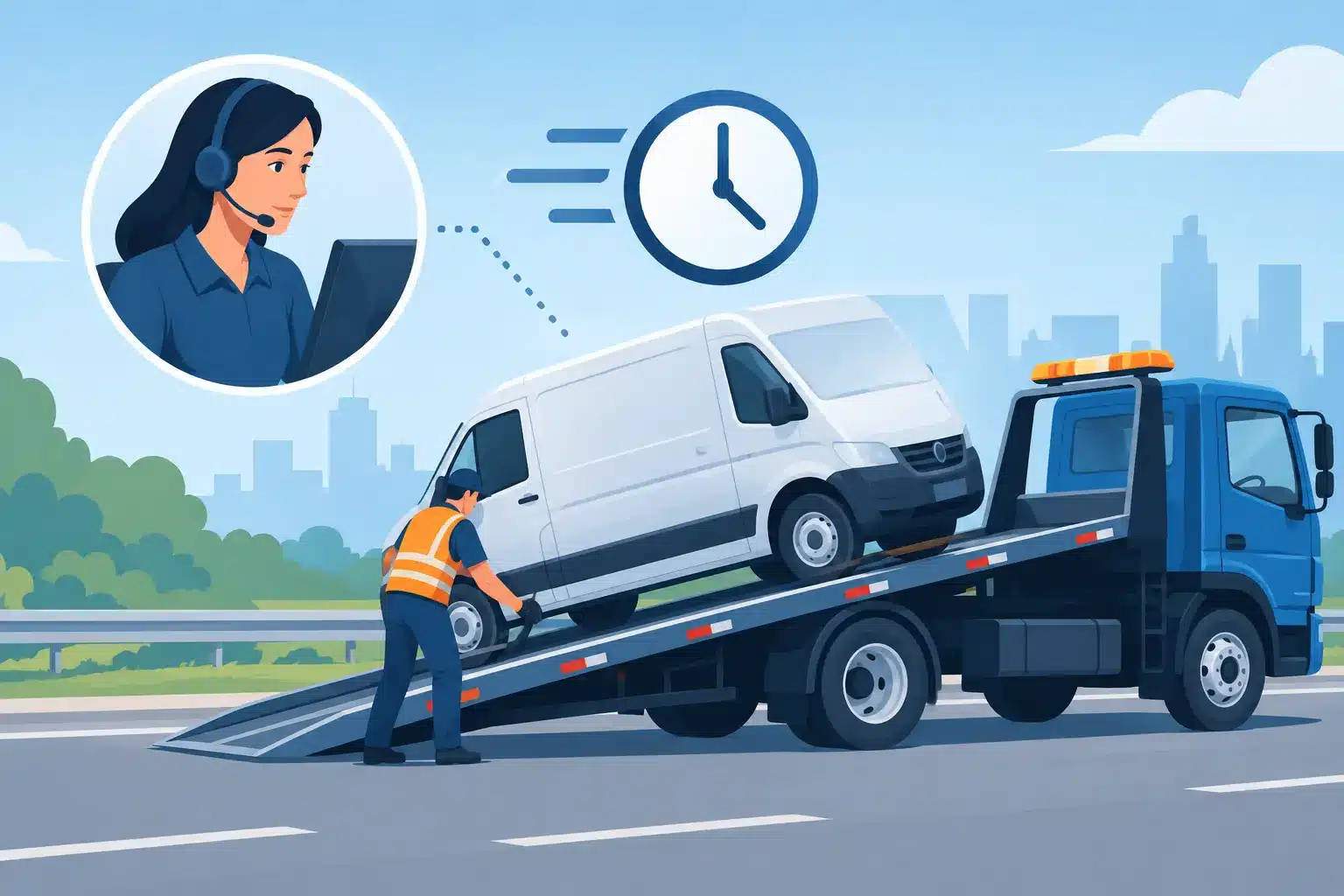
A van that will not start outside a customer’s address, a tyre failure on a busy road, or an engine warning light that turns into a complete stop can put your whole day on hold. Knowing how van recovery dispatch works makes the situation less uncertain. The purpose is simple: get the right recovery vehicle, equipment and trained operator to you as quickly as practical, then move your van safely to the right place.
For a working van, recovery is not just about getting off the roadside. It is about protecting the driver, the vehicle, the load and the next job. A good dispatch process starts making those decisions from the moment you call.
When you contact a recovery provider, the dispatcher needs a clear picture of what has happened. You do not need to diagnose the fault yourself. Explain what the van is doing, where it has stopped and whether it is safe where it is. That gives the team enough information to decide whether roadside assistance may get you moving again or whether a recovery vehicle is needed.
Your exact location is usually the most urgent detail. A road name, postcode, nearby landmark, junction number or a live map location can all help. On motorways and major A-roads, marker posts, exit numbers and the direction of travel are particularly useful. Saying only that you are “near Camberley” can delay the response when every minute matters.
The dispatcher will also ask where the van needs to go. It may be a local garage, your depot, home, a dealership or another address further afield. This is not an afterthought. The destination affects the vehicle assigned, the route planned and the price quoted.
Vans are not all recovered in the same way. A compact car-derived van and a long-wheelbase, high-roof commercial vehicle need different space, capacity and loading arrangements. The dispatcher checks the practical details before sending help, rather than arriving with equipment that is unsuitable.
Expect questions about the make and model, registration, approximate size and whether the van is loaded. A van carrying tools is different from one carrying heavy materials, fragile goods or a full commercial load. If there are passengers, animals, hazardous substances, a trailer or a roof rack, say so at the start.
The condition of the vehicle matters too. If the wheels turn and the steering works, it may be possible to winch the van onto a flatbed. If it has collision damage, locked wheels, a seized engine, suspension damage or is stuck in mud, the recovery approach may need to change. Honest details prevent wasted time and help keep loading safe.
Once the call is logged, the dispatcher matches the job to the available fleet and technician. This is where experience matters. The closest vehicle is not always the right vehicle. A recovery operator may need a suitable payload rating, a winch, wheel skates, lifting equipment or the space to carry a driver and passengers.
For straightforward breakdowns in the Camberley and GU areas, a local unit may be allocated immediately. For a longer-distance transport or a larger van, dispatch may involve checking which recovery vehicle can complete the job safely without unnecessary delay. The aim is a realistic response time, not a promise that ignores traffic, road closures or the location of the breakdown.
At K & D Transport, dispatch is built around 24/7 emergency roadside support, with recovery, towing, jumpstarts and transport arranged according to the problem in front of you. The right response can be as simple as a battery boost. When it cannot, the next step is safe collection and onward transport.
Not every call needs a tow. If a flat battery is the only issue, a jumpstart may be enough to get the van running. A puncture may be resolved with a safe wheel change where you have a usable spare and the roadside conditions allow it. In some cases, a minor issue can be checked on site and the driver can continue to a garage.
However, roadside assistance is not always the sensible option. A van that starts after a jumpstart may still have a charging fault. Driving away with a warning light, overheating engine, gearbox issue or brake problem can turn a manageable breakdown into more expensive damage or a safety risk. The recovery operator will assess the situation and recommend the safer course.
Full recovery is normally chosen when the van cannot be repaired safely at the roadside, cannot be driven legally, has been involved in an accident, or needs to be moved without adding mileage. For businesses, direct transport to a trusted repairer can also be the quickest way to get a vehicle back into service.
On arrival, the operator first looks after the immediate scene. If the van is in a vulnerable position, they will assess traffic, visibility and the safest way to work. You should remain in a safe place where possible, especially on fast roads. Do not stand between vehicles, attempt roadside repairs in live traffic or try to push a heavy van into a better position.
The operator will confirm the vehicle details, inspect the condition of the van and check for anything that affects loading. They may photograph existing damage for clarity. This is normal practice and protects everyone by recording the vehicle’s condition before transport.
Loading is then carried out using the appropriate method. A flatbed is often the preferred option for vans because the vehicle is carried with all wheels off the road. It can be particularly useful for non-running vehicles, damaged vans and longer journeys. In other situations, towing may be appropriate, but it depends on the van, the fault, the road conditions and the intended distance.
The driver should remove or secure loose items inside the cab and load area before transport. Tools, equipment and stock can move during loading and travel. If the van contains valuable goods, tell the operator so they can factor this into the handover and transport arrangements.
A reliable dispatcher keeps communication clear. You should receive confirmation that the job has been accepted, an estimated arrival window where possible and updates if circumstances change. Traffic, a previous emergency call, weather and access restrictions can affect timing, but silence should not leave you wondering whether help is on the way.
If you are waiting in an unsafe or exposed location, make that clear during the call. A breakdown on a narrow road, at night, near a blind bend or on a motorway shoulder needs urgent attention. Equally, if the van is secure on private land, the dispatch team can plan the collection without treating it as a live roadside danger.
For scheduled van transport, timing can be more flexible. The dispatcher may arrange collection around your garage booking, fleet availability or access at the delivery point. Emergency recovery is about speed; planned transport is about safe coordination. Both need accurate information from the start.
Keep your phone charged if possible and have your registration, current location and destination ready before calling. If you can do so safely, take a quick look around for a recognisable sign, road number or nearby business name. Let the dispatcher know whether the van is blocking access, carrying a load or in a dangerous position.
Do not assume that a fault is minor because the van is still able to move a short distance. Continuing to drive can be the wrong decision with overheating, oil pressure warnings, brake concerns, steering faults or unusual noises. Stopping early can make recovery safer and reduce the risk of further damage.
When help arrives, take a moment to confirm the destination and make sure you have removed personal belongings, keys and essential paperwork as agreed. A calm, accurate first call gives the recovery team the best chance of getting your van moving again, or getting it where it needs to be without further disruption.

