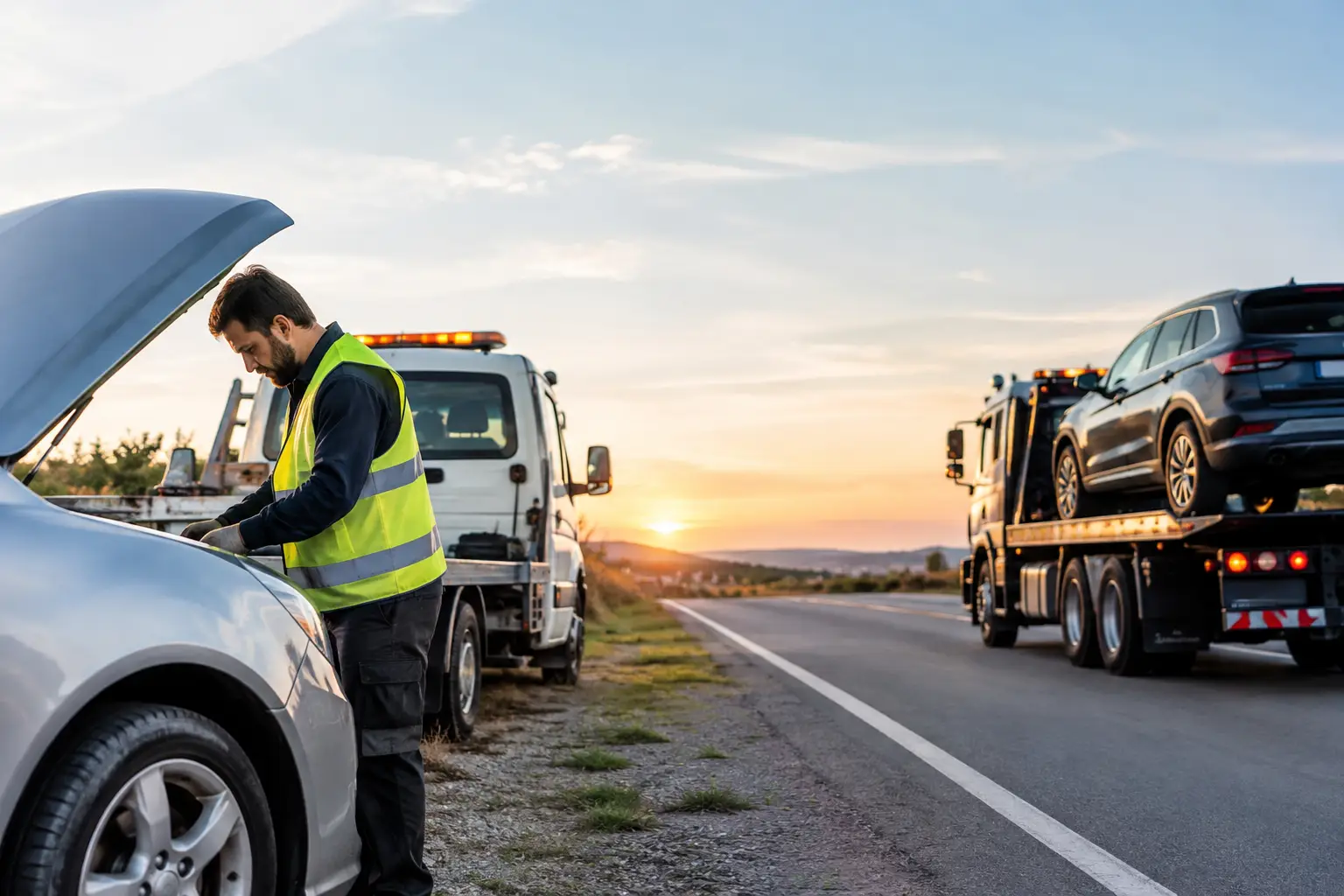
A breakdown rarely happens at a convenient time. You may be on the school run, heading to work, carrying tools in a van or stopped on the roadside after dark. When you need help quickly, the choice between local towing vs national recovery can affect how soon your vehicle is moved, who you speak to and what happens next.
Both options have a place. National recovery schemes can be useful for planned cover and long-distance journeys, while a local recovery operator is often the more direct route when you need a vehicle collected or transported without delay. The right choice depends on where you are, the condition of the vehicle and whether you need roadside help, recovery or onward transport.
Local towing is delivered by an independent recovery company operating in a defined area. For drivers in Camberley and nearby GU postcode areas, that usually means a team that knows the local roads, common congestion points and practical routes for reaching residential streets, business parks, car parks and main routes quickly.
The biggest advantage is direct contact. Rather than reporting the problem to a national call centre and waiting for a contractor to be assigned, you can speak to the recovery provider handling the job. You can explain whether the vehicle is at home, on a busy road, in a multistorey car park or at a garage, and confirm the vehicle type before the right equipment is sent.
A capable local operator can do more than tow a car. The service may include breakdown recovery, roadside assistance, jumpstarts for flat batteries, van towing and transport to a home address, garage, dealership or another UK destination. This matters when the immediate problem is not simply getting off the road. You may need a failed vehicle moved to a repairer, a non-runner collected after purchase or a van recovered with work equipment inside.
Local service is not automatically faster in every circumstance. Availability, distance and the severity of the incident still matter. But a nearby towing fleet can often remove unnecessary layers between the stranded driver and the team coming to help.
National recovery is usually arranged through a membership organisation, insurance policy or vehicle manufacturer package. These services are built around broad UK coverage, with a central contact point and a network of approved agents or subcontracted recovery providers.
For motorists who travel widely, this can offer reassurance. If your car fails hundreds of miles from home, a national scheme may arrange roadside attendance, recovery to a suitable location and, depending on the policy, onward travel, overnight accommodation or transport for passengers. The exact help available depends entirely on your level of cover and the terms of the policy.
That distinction is worth checking before you rely on it. Some policies cover roadside repair but not home start. Some recover a vehicle only to the nearest suitable garage. Others include national recovery, but impose limits relating to vehicle size, passengers, trailers or repeated call-outs. A van driver, for example, should make sure their policy covers the vehicle class and any required recovery arrangements.
National cover can also involve a longer chain of communication. You report the issue to the scheme, the scheme identifies an available contractor and the assigned operator contacts you. In many cases this works well. During periods of extreme weather, major road disruption or high breakdown demand, however, response times can depend on network capacity rather than the location of the nearest available recovery vehicle.
The main difference is not simply local distance versus UK coverage. It is the way the service is arranged and delivered.
With local towing, you are normally speaking directly to the company responsible for collecting your vehicle. You can agree the destination, discuss access problems and confirm what assistance is needed. This is particularly useful where a vehicle needs specialist handling, the wheels are locked, the car cannot be put into neutral or a van is loaded and needs careful transport.
With national recovery, your provider manages the booking through its own process. That may be ideal if the cost is covered by an existing membership or insurance package. But the recovery plan can be shaped by policy limits, approved destinations and the availability of network contractors.
There is also a difference in flexibility. A local recovery team can often arrange a straightforward collection for a vehicle that is not an emergency breakdown at all. You might need a car transported from one address to another, delivered to a garage before an MOT appointment or collected after an unexpected mechanical failure. These jobs do not always fit neatly within national recovery cover, but they are central to a towing and transport service.
Cost should be considered honestly. If you already hold comprehensive national cover and the call-out is included, using it may be the sensible financial choice. If you do not have cover, if the policy excludes the situation or if you need a specific transport service, a local provider can give you a clear quote based on the recovery required. Always provide the vehicle make, model, location, condition and destination so the quote reflects the actual job.
A local towing service is often the practical choice when speed, direct communication and a specific destination matter most. This includes a car that will not start on the driveway, a flat battery outside work, a breakdown close to home or a vehicle that needs taking directly to your chosen garage.
It is also a strong option when you need help with a van. A van may be your livelihood, not just your transport. Getting it recovered safely, with the right vehicle and a clear plan for where it is going, can reduce disruption to your working day.
Local recovery is particularly valuable when the situation is awkward. Perhaps you are in a tight residential road, a private car park, a low-clearance area or somewhere with difficult access. A team familiar with the area can ask the right questions before setting off and arrive prepared for the location.
K & D Transport provides 24/7 roadside assistance, recovery and vehicle transport for cars and vans, helping drivers who need a direct and dependable response when their vehicle cannot continue.
National recovery cover can be the better fit when you are far from home and your membership includes the help you need. It can be especially useful for a family travelling on holiday, a long motorway journey or a breakdown in a part of the country where you do not know any local operators.
It may also be the simplest route where your manufacturer warranty, lease agreement or insurance policy requires you to use an approved recovery line. In that case, calling a separate towing company could affect what costs can be claimed back.
Before relying on a national scheme, check whether it offers roadside repair, local recovery, nationwide transport or onward travel. Those are different services. If your vehicle needs to reach a particular garage or return to your home area, confirm that the policy will support that destination before authorising recovery.
Start with safety. If your vehicle is in a dangerous position, move yourself and passengers to a safe place where possible and follow any relevant road safety guidance. Do not attempt roadside repairs near live traffic or put yourself at risk trying to move a disabled vehicle.
Then consider the outcome you need. A jumpstart may be enough if the battery is flat and there is no other fault. If the vehicle has warning lights, overheating, tyre damage, collision damage or a mechanical issue, recovery may be the safer option. If you already know the car cannot be repaired roadside, tell the recovery provider where you want it transported.
Have the useful details ready: your exact location, registration number, vehicle type, whether it is safe to roll, the nature of the fault and your preferred destination. For a van, mention its approximate size, load and any access restrictions. Clear information helps the right recovery vehicle arrive first time.
The best recovery choice is the one that gets you and your vehicle out of a difficult situation safely, without adding unnecessary delay. If you are close to home or need a direct collection, a local towing team can give you a clear, practical route forward. When you are far away and have suitable cover in place, national recovery may provide the wider support you need. In either case, act early, give accurate details and choose a service that can deal with the vehicle in front of them, not just the policy on paper.

