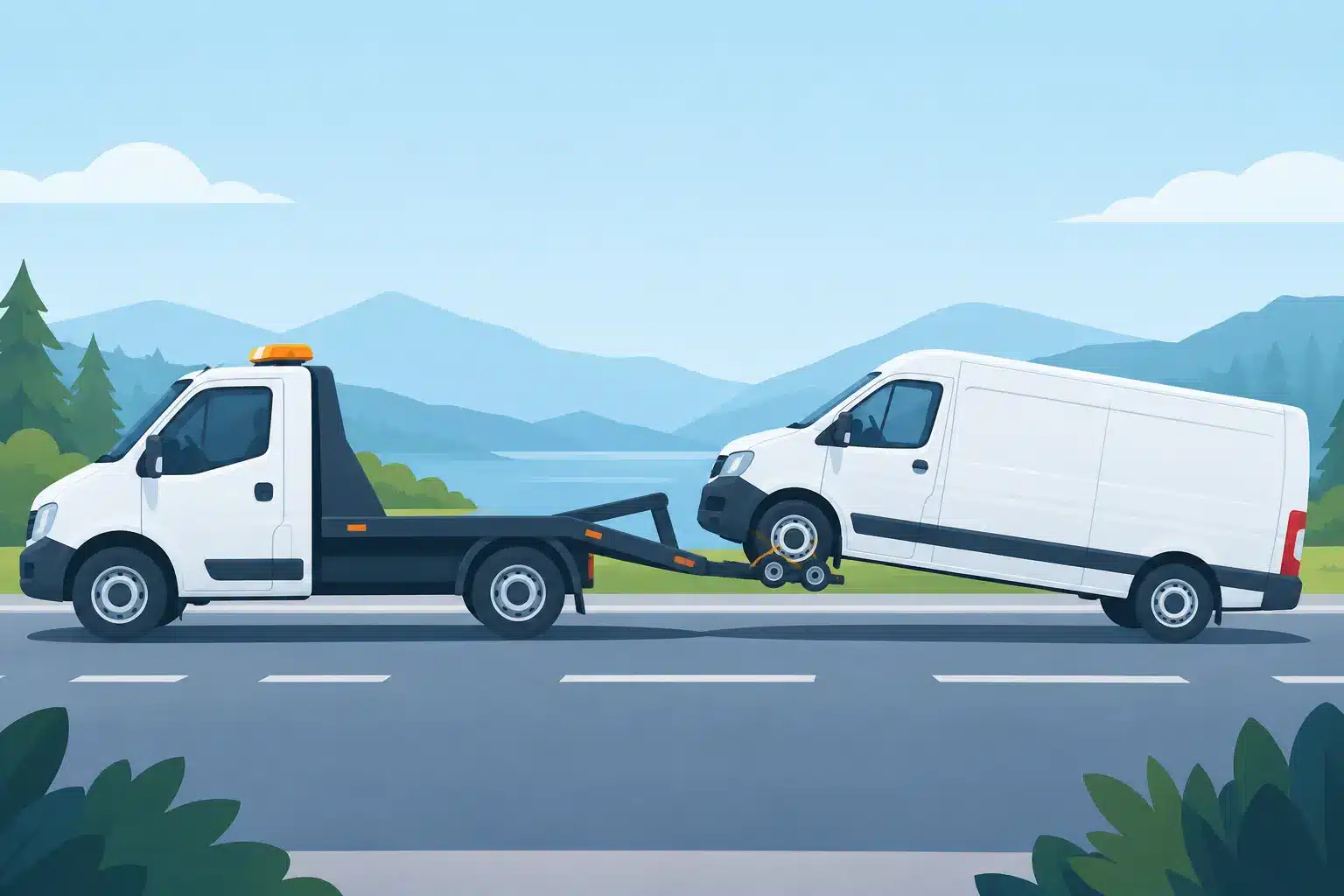
A fully loaded van can weigh far more than its owner expects. This van towing weight guide explains the figures that matter when arranging recovery, transporting a van, or towing a trailer. Getting the weight right helps ensure the correct recovery vehicle is sent first time, without delays at the roadside.
The phrase towing weight can mean two different things. It may mean how much a van is legally permitted to tow behind it, or how much the van itself weighs when it needs to be recovered. They are related, but they are not interchangeable.
If your van has broken down and needs transporting, the recovery operator needs to know the van's actual or likely weight. An empty short-wheelbase panel van is very different from a long-wheelbase vehicle carrying tools, stock, racking, fuel and passengers. The right answer affects whether a standard recovery lorry is suitable or whether a heavier flatbed or specialist vehicle is required.
If you are towing a trailer with your van, the key concern is whether the combined van and trailer weight remains within the manufacturer's limits and your licence entitlement. The figures are normally shown on the vehicle identification plate, often located in a door shut, under the bonnet, or in the handbook.
The terminology can look more complicated than it is. These are the main figures a driver should understand:
For recovery purposes, the GVW is often a useful starting point, but it is not always the weight the van is carrying at that moment. A 3.5-tonne van may be empty, or it may be close to its maximum permitted weight. Tell the recovery team which is most likely.
Start with the vehicle plate rather than a guess based on the model name. Two vans that look identical can have different weight limits because of their wheelbase, engine, body type, suspension, factory options or conversion work.
To check a planned towing combination, add the actual loaded weight of the van to the actual loaded weight of the trailer. This total must not exceed the GTW. The trailer's own maximum authorised mass must also stay within the van manufacturer's stated towing limit. In many cases, the van's braked towing capacity is lower than the difference between its GTW and GVW, so check both figures.
For example, a van with a 3,500kg GVW and a 6,000kg GTW may appear able to tow 2,500kg. That only works if the vehicle manufacturer permits a 2,500kg trailer and the van itself is not overloaded. If the van is carrying a heavy payload, the load must still be secure, axle limits must be met, and the trailer's noseweight must remain within the permitted limit.
Trailer weight is not just the trailer chassis. Include the equipment, vehicle, machinery, materials and anything stored in it. A trailer that is safe when empty can become unsuitable very quickly once loaded. If you are unsure of the actual weight, use a public weighbridge before a long journey or a regular heavy-load job.
Licence rules may also affect what you can tow. Your entitlement depends on when you passed your driving test, the vehicle category you hold and the combined weights involved. Do not assume that a standard car licence covers every van-and-trailer combination.
When a van cannot be driven, its towing capacity is no longer the main issue. The question becomes whether it can be safely lifted, winched or carried. The recovery method depends on the van's size, loading, condition and location.
A lightweight, empty van with free-rolling wheels may be suitable for a standard transporter. A loaded commercial van may need a higher-capacity recovery vehicle. If it has suspension damage, a seized wheel, steering damage or a gearbox fault, it may need skates, dollies, a winch or a full flatbed rather than a simple tow.
The weight of any contents matters just as much as the van itself. Tools, trade equipment, parcels, shelving and stock can add hundreds of kilograms. Never remove essential safety equipment or attempt to transfer a heavy load beside a live road simply to make recovery easier. Give an honest description when booking help, and the operator can plan the safest option.
At K & D Transport, clear information at the point of dispatch helps us send appropriate support for vans across Camberley, the GU area and wider recovery routes. It prevents the frustrating situation where a recovery vehicle arrives but does not have the capacity or equipment needed for the job.
If it is safe to do so, have the registration, make, model and wheelbase available. Let the recovery team know whether the van is empty, partly loaded or heavily loaded. Mention roof racks, ladders, refrigeration units, camper conversions, tail lifts and any other additions that change the height, width or weight.
You should also explain the fault. A van that starts but will not move needs a different approach from one with a flat tyre, accident damage or a dead battery. If the wheels do not turn, say so. If the vehicle is in an underground car park, a narrow lane or a restricted-height area, give that detail before dispatch.
Do not rely on a friend with a tow rope for a heavy van or a van with an unknown fault. Apart from the risk to people and vehicles, an unsuitable tow can worsen transmission, steering or braking damage. Professional recovery is designed to protect the vehicle as well as get it out of the way.
A roadside breakdown is not the moment to calculate every figure perfectly. Your priority is getting yourself to a safe place, using hazard lights where appropriate and keeping clear of traffic. If you cannot find the vehicle plate or paperwork, give the operator the registration, van type and a realistic description of its load.
A good recovery team can assess the likely weight and plan from there. Be especially clear if you are carrying construction materials, machinery, stock, tools or a fitted conversion. These details are not a formality - they determine the vehicle, crew and equipment required.
When your van needs moving, a straight answer about its weight and condition is the quickest route to safe, effective recovery. Keep the registration and loading details to hand, then ask for the right help when you need it most.

