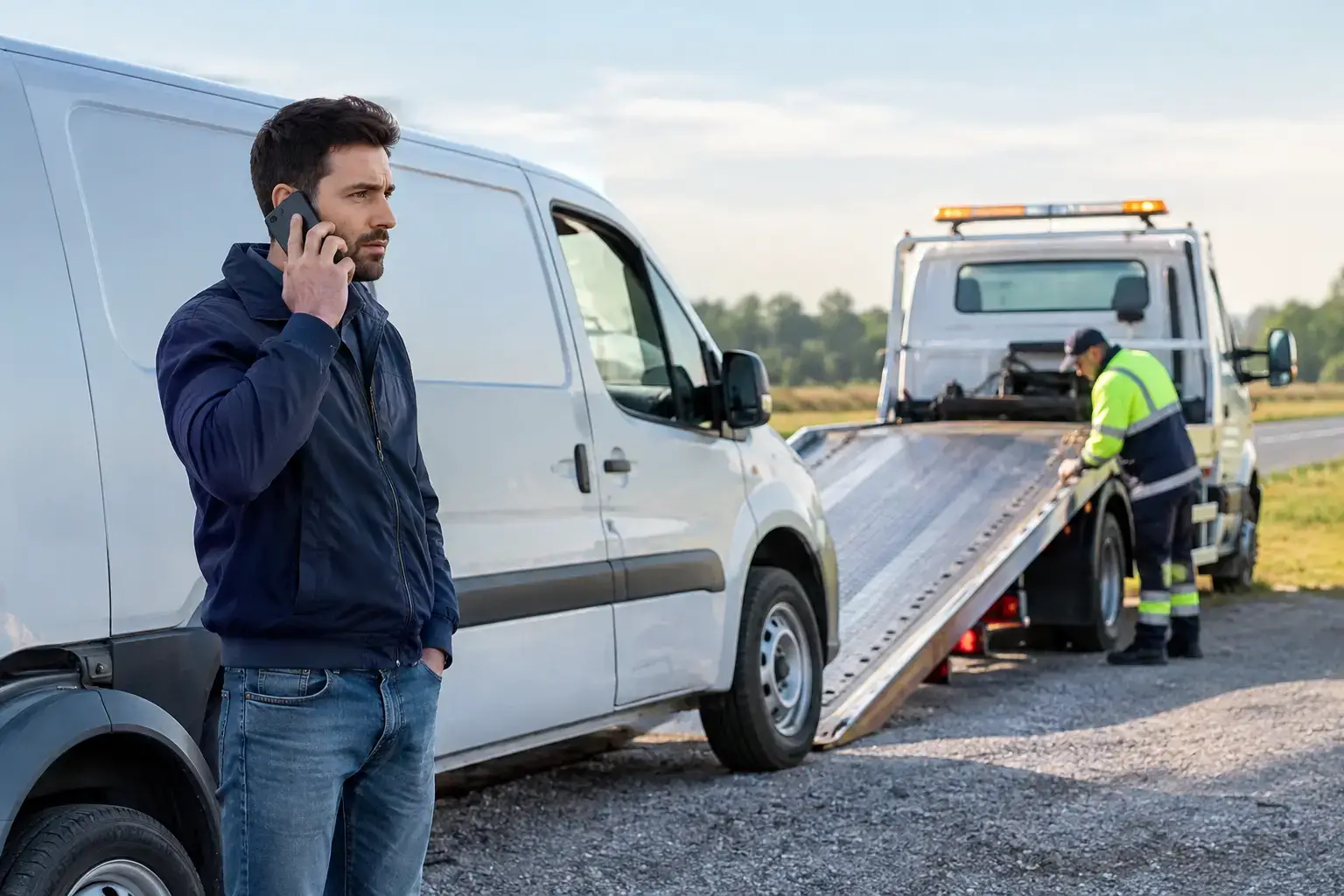
A van stopping at the roadside is rarely a minor inconvenience. It may mean missed deliveries, tools trapped in the load area, passengers left waiting or a driver stranded on a busy route. These van recovery examples show the situations where professional help is the safest and quickest option, whether the van needs a restart, roadside assistance, recovery or transport.
For drivers in Camberley, nearby GU postcode areas and beyond, the priority is simple: get the vehicle and the people around it to safety, then arrange the right support without wasting time.
Not every fault calls for the same response. A van with a flat battery can often be back on the road after a jumpstart. A van with serious mechanical damage may need to be lifted and transported rather than towed on its wheels. Explaining what has happened when you call helps the recovery team send the right vehicle and equipment first time.
A driver may turn the key or press the start button and get nothing more than a click, dim dashboard lights or a slow crank. This is one of the most common call-outs, particularly after a van has been parked overnight, left with interior lights on or used for repeated short journeys.
If the battery is simply discharged and the vehicle is otherwise safe, a professional jumpstart may get the van running quickly. However, a restart is not always the full answer. If the battery warning light stays on, the van cuts out again or the alternator appears to be failing, continuing the journey could leave the driver stranded a second time. In that case, transport to a garage is often the sensible choice.
A puncture is more than an inconvenience when it happens on a dual carriageway, narrow rural road or busy town route. Many vans carry heavy loads, and a damaged tyre can affect handling quickly. Driving on a flat tyre may also damage the wheel, suspension components and tyre sidewall.
Where there is a safe place to stop, the driver should move as far from traffic as possible, use hazard lights and keep clear of moving vehicles. Do not attempt a wheel change beside fast traffic or where the ground is unstable. Recovery support can move the van to a safer location, assist with the immediate problem where suitable, or transport it for tyre replacement.
Steam from the bonnet, a rising temperature gauge or a strong smell of coolant means it is time to stop. Continuing to drive an overheating van can turn a manageable cooling-system repair into major engine damage. The same applies when a red oil-pressure warning appears or the engine starts making unusual knocking noises.
Pull over safely, switch off the engine and avoid opening a hot coolant reservoir. A recovery operator can assess the safest way to move the vehicle. In many cases, the van should be transported rather than driven any further. This protects the engine and avoids turning a breakdown into a much larger repair bill.
A van that suddenly loses power may still roll, but that does not mean it is safe to continue. The cause could be a fuel-system fault, turbo issue, limp mode, electrical failure or engine management problem. If acceleration is poor, warning lights are on or the vehicle cannot maintain a safe speed, it is better to arrange recovery.
This is especially urgent on motorways and high-speed roads. Get to a safe stopping point if possible, keep occupants away from traffic and report the van’s location accurately. Tell the recovery team if the vehicle is loaded, as load weight and access can affect the recovery plan.
Roadside assistance is useful when the fault can be dealt with safely at the scene. A loose battery connection, flat battery or straightforward wheel issue may be resolved without a tow. But some faults make onward travel a poor gamble.
A van usually needs towing or transport when it has broken down with a suspected gearbox fault, failed clutch, steering problem, damaged suspension, engine issue or major electrical failure. The same applies after an accident, even if the damage looks limited. A cracked light, bent wheel or damaged bumper can hide problems that affect roadworthiness.
Modern vans also need careful handling. Incorrect towing can cause further damage, particularly with automatic gearboxes, electric vans, locked wheels or driveline faults. A trained recovery team will decide whether the vehicle can be moved using towing equipment or whether full transport on a recovery vehicle is the safer method.
After a collision, the first task is not deciding where the van will be repaired. It is making the area safe. Stop, use hazard lights where possible, check for injuries and contact emergency services if anyone is hurt or the road is blocked or dangerous.
Even a low-speed collision can leave a van unsafe to drive. A wheel may be knocked out of alignment, fluid may be leaking, a door may not shut properly or the load area may have been affected. If there is any doubt, do not take chances by driving it away.
A proper recovery service can collect the van and take it to a chosen garage, secure location or other suitable destination. If the vehicle is carrying equipment, stock or fragile items, mention this at the time of booking. Clear information allows the recovery operator to prepare for the load and avoid unnecessary delays.
A fully loaded van behaves very differently from an empty one. Extra weight affects braking, handling and the equipment needed to recover it safely. It can also mean that a routine roadside fault becomes more urgent, especially when the vehicle is carrying trade tools, business stock or time-sensitive goods.
When requesting help, give the van’s make and model, its approximate size, the nature of the problem and whether it is loaded. It is also useful to say if access is difficult, such as a car park with low clearance, a private lane, underground parking area or narrow residential street.
There is no benefit in guessing that a fault is small when the van cannot be moved safely. Giving an honest description means the correct recovery vehicle can be dispatched and the job can be completed with fewer complications.
Once recovery has been arranged, focus on staying safe and making the collection straightforward. If the van is in a dangerous position and can be moved without risk, move it to the safest nearby place. Otherwise, do not try to push it through traffic or carry out repairs at the roadside.
Keep your phone available, note your exact location and look for a road name, landmark, junction number or nearby business. If you are on a motorway or major route, use the information on roadside marker posts where available. Let the recovery team know about any changes, such as a flat battery becoming a no-start issue or a tyre failing completely.
Take valuables and essential work items from the cab if it is safe to do so. For a loaded van, secure doors and make sure the contents are protected before transport. Do not leave passengers standing close to the vehicle or on the traffic side of it.
The best recovery option depends on the fault, the van’s condition and where it has stopped. A local response is valuable when you are stranded nearby and need prompt assistance. For longer-distance transport, the key question is whether the recovery provider can safely take the vehicle to your chosen destination rather than simply move it off the road.
K & D Transport provides 24/7 roadside assistance, van towing and vehicle transport for drivers who need a clear, practical response. Whether the problem is a dead battery, a breakdown that cannot be repaired at the roadside or a van that needs transporting after an accident, the aim is to get help moving quickly and handle the vehicle properly.
If your van is unsafe, losing power or stopped where it should not be, do not wait for the problem to become more difficult. Contact a professional recovery service, explain the situation clearly and let trained operators get you, your vehicle and your day moving in the right direction.

